
Why Microduct Connector Reliability Defines Modern Fiber Deployments?
The telecommunications infrastructure sector continuously evolves toward higher density and faster rollout. In this landscape, passive component engineering determines long-term network performance. One critical element is the Microduct Connector, which joins individual sections of microduct pathways to ensure uninterrupted cable blowing and sealing. Without robust joining solutions, blowing efficiency drops, and maintenance cycles shorten. The industry now focuses on standardized, pressure-resistant fittings that reduce installation variance. Modern projects demand components that accommodate expansion, contraction, and ground movement while preserving air-tightness for microcable jetting. This article examines technical criteria, application trends, and quality benchmarks that shape current engineering decisions.
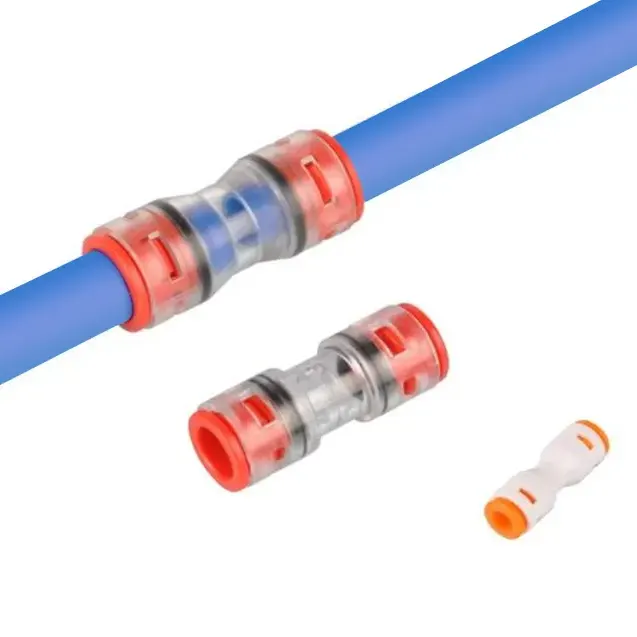
Technical Fundamentals of Microduct Pathway Sealing
Reliability starts with the mechanical design of joining interfaces. A properly engineered microduct connector must withstand pulling forces, temperature cycles, and chemical exposure from soil or ducts. Unlike generic couplings, dedicated telecom-grade fittings incorporate anti-slip grips and elastomeric seals that prevent water ingress. Engineers evaluate three core attributes: insertion loss equivalence (airflow continuity), axial retention force, and reusability after disassembly. Field data shows that poor-quality fittings create bottlenecks during fiber blowing, increasing labor time and risking cable damage. Therefore, procurement frameworks now prioritize test reports from accredited laboratories rather than lowest price alone. The trend moves toward zero-burr internal geometries that protect cable sheaths during passage.
Material Science Advances
Polymer compounds with UV inhibitors and flame-retardant additives dominate current offerings. High-density polyethylene remains standard for outdoor buried networks, while polyamide grades provide better chemical resistance in industrial zones. A well-designed connector often integrates dual durometer seals—hard outer rings for structural grip and softer inner lips for conformal sealing. Manufacturers also experiment with shape-memory polymers that self-adjust after thermal expansion cycles. Such innovations reduce the need for frequent retorquing during annual inspections. Material selection directly impacts the service life, which in harsh environments must exceed two decades without brittle fracture.
Installation Efficiency Factors
Speed of assembly without specialized tools is a rising requirement. Push-fit mechanisms with audible click confirmation prevent under-insertion errors. Some designs feature color-coded rings that indicate correct engagement depth. For large-scale projects, the ability to reconnect and reposition without cutting the microduct saves substantial resources. Quick-latch systems that tolerate angular misalignment up to several degrees further simplify trench works. Contractors report that using a consistent microduct connector family across different diameters reduces inventory complexity and training costs. Therefore, modular families that share sealing components gain preference among network operators.
Application Scenarios Driving Specification Changes
Fiber-to-the-home and 5G backhaul expansions accelerate the need for reliable microduct accessories. Underground blow-in routes require connectors that endure soil settlement without leaking. Aerial installations demand UV resistance and wind-induced vibration tolerance. In building risers, fire performance becomes mandatory. The same component family must adapt to each scenario while maintaining consistent pneumatic performance. Additionally, temporary restoration after natural disasters calls for reusable fittings that can be rapidly deployed. These diverse needs push manufacturers to offer variants with dedicated seal materials: silicone for extreme cold and fluorocarbon for chemical plants.
Water and Gas Tightness Requirements
Ingress protection levels are no longer optional. For buried microduct networks, water blocks at each joint prevent long-term fiber degradation caused by hydrogen formation. Leading specifications demand pressure retention at several bars for several minutes without drop. Some operators require helium leak testing on sample batches. An inadequately sealed microduct connector will allow moisture migration that freezes and cracks ducts in cold climates. Thus, modern tenders include mandatory leak rate thresholds, typically below a minimal cubic centimeter per minute at specified differential pressure. Testing protocols follow international cable industry standards, ensuring comparability across vendors.
| Parameter Category | Critical Requirement | Verification Method |
|---|---|---|
| Axial pull-out force | Resist tension equal to cable blowing load | Universal test machine with constant speed |
| Pressure rating | No leakage after defined cycles | Pneumatic decay test |
| Thermal cycling | Seal integrity from cold to high heat | Environmental chamber with pressure monitoring |
| Chemical resistance | No cracking after standard fluid immersion | Visual inspection and dimension measurement |
Quality Assurance Frameworks for Passive Components
Consistent production is as important as design. Modern factories implement statistical process control for injection molding parameters such as temperature, pressure, and cycle time. Inline vision systems reject parts with flash or short shots. For the sealing elements, hardness measurement and compression set testing are routine. A traceable manufacturing lot number allows root cause analysis if field failures occur. Third-party audits for ISO management systems are expected. In the case of the microduct connector, each production batch should include samples subjected to pull and pressure tests. Documentation of these results builds confidence for engineering firms that specify components for multi-year infrastructure projects.
Installation Error Prevention
Human factors influence real-world reliability. To minimize misassembly, leading designs incorporate asymmetrical keying features that prevent reversed insertion. Some have visual indicators that change color after full locking. Training manuals with torque recommendations for threaded variants reduce overtightening damage. Contractors also benefit from application videos that demonstrate correct alignment before pushing. When a joint fails due to improper installation, it is often wrongly attributed to component quality. Therefore, responsible suppliers provide clear written instructions and on-site demonstrations for large projects. This proactive approach improves overall network performance statistics.
Comparative Analysis of Joining Methods
Several techniques exist for connecting microducts: welding, mechanical compression, and push-fit sealing. Welding offers permanent bond but requires power and skilled labor, making it slow for emergency repairs. Compression fittings rely on torque tools and risk overtightening. The push-fit type using a threaded cap or snap mechanism delivers repeatable results with minimal training. Within the push-fit category, a high-performance connector uses tandem seals and a conical wedge that compresses uniformly. Field studies indicate that such designs maintain seal integrity after multiple open-close cycles, which is valuable for network reconfiguration. Hence, major telecom operators now standardize on quick-connect families with certified pressure retention.
Global Supply Chain Considerations
Component availability directly affects project timelines. Many infrastructure developers maintain safety stocks of critical joining elements to avoid delays. The shift toward regional manufacturing reduces lead times and logistics complexity. Vendors that offer modular kits containing connectors, plugs, and end caps simplify ordering and warehouse management. Additionally, the trend of just-in-sequence delivery to construction sites is gaining ground. For a connector that must match duct inner diameters precisely, dimensional consistency across batches becomes non-negotiable. Quality suppliers provide certificates of conformance with each shipment, listing measured values of critical dimensions. This transparency helps contractors avoid on-site mismatches that stop work.
Long-term Performance Monitoring
Network operators increasingly install monitoring sensors at selected joints to detect moisture or pressure loss. Smart connectors with embedded RFID tags allow non-invasive logging of installation date, batch code, and location. Data from thousands of field installations creates feedback loops for product improvement. For example, if a certain seal compound shows higher degradation in hot-humid zones, material formulation can be adjusted. The passive base component remains the same, but the data ecosystem around it evolves. Therefore, forward-looking procurement includes clauses for technical cooperation and field failure analysis. The ultimate goal is a network that requires less active maintenance over its lifespan.
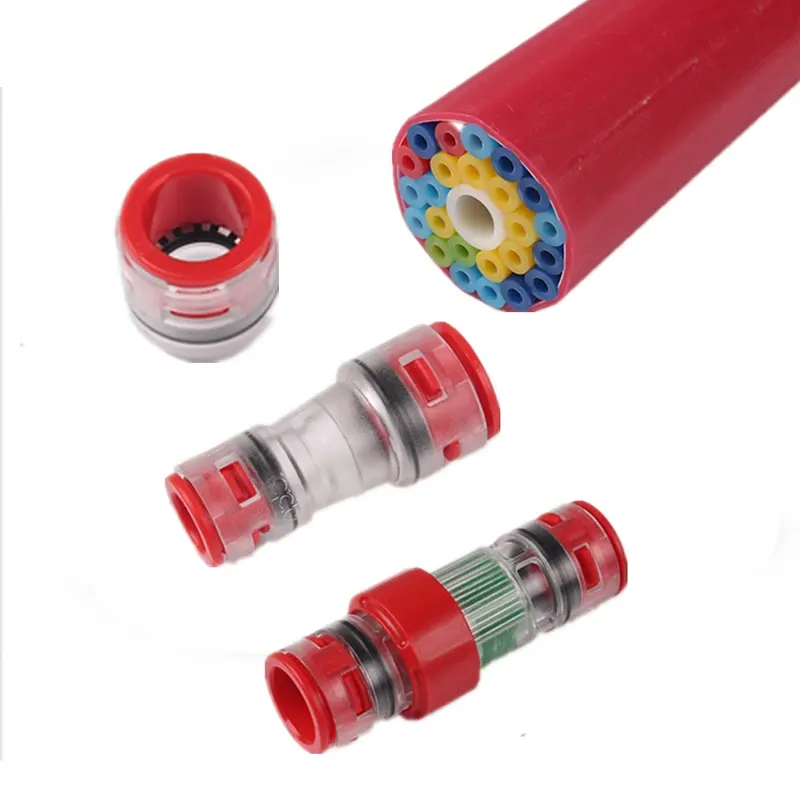
How Wenzhou Hantang Telecommunications Technology Co.,Ltd Addresses These Demands
Since 2008, the company has built expertise in producing microduct accessories that align with safety and environmental protection principles. Its portfolio includes expandable duct plugs, simplex plugs, and complementary fittings designed for modern telcom projects. Each product undergoes professional handling from production to distribution, with a design philosophy that combines safety, eco-friendliness, and contemporary aesthetics. The firm offers tailored configurations to meet specific project requirements without compromising on speed or quality. Competitive pricing structures and rapid supply capabilities enable clients to maintain project momentum. Moreover, the company supports small starting quantities and provides free trials for new components, allowing engineering teams to validate performance before full-scale deployment. By prioritizing quality, refinement, and innovation, Wenzhou Hantang Telecommunications Technology Co.,Ltd strives to achieve an operational state where infrastructure partners can focus on network expansion knowing that joining reliability is fully covered. The company welcomes collaboration that begins with mutual understanding and leads to shared success.
In summary, the telecommunications industry continues to raise the bar for passive components. A correctly specified and properly installed microduct connector eliminates a common failure point in fiber networks. Material science, assembly efficiency, and rigorous quality control form the pillars of dependable infrastructure. As project complexity increases, the role of specialized manufacturers who combine engineering depth with flexible service becomes ever more critical. Wenzhou Hantang Telecommunications Technology Co.,Ltd exemplifies this approach through its dedicated production of microduct connection solutions, backed by decades of practical experience and a commitment to continuous improvement. The future will see tighter integration between component design and network monitoring, but the fundamental need for a robust, leak-free joint remains unchanged.